


NextStop Blog
3D Printers Bring Innovation and Savings at Metro
Return to Blog 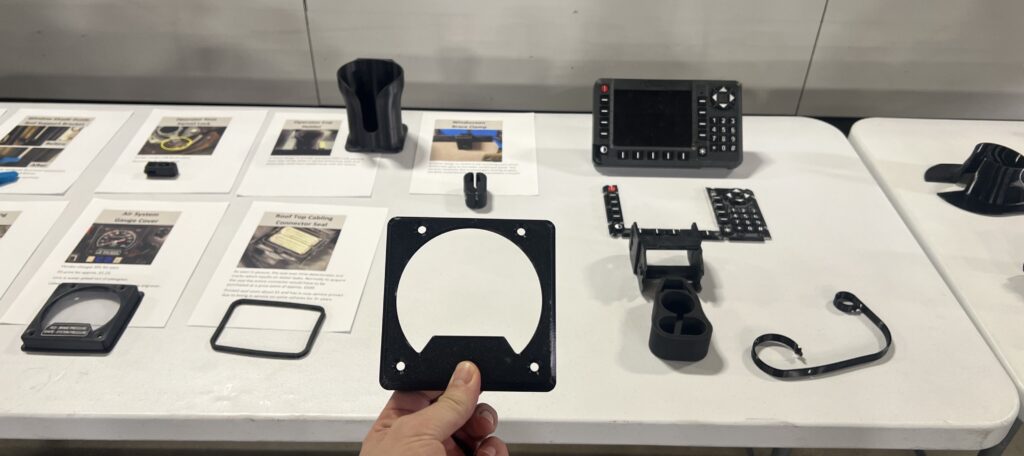
In 2024, Metro invested in industrial 3D printers, and the impact has been swift and significant. Over the last year alone, our team has printed more than 7,500 parts in-house, saving tens of thousands of dollars compared to purchasing replacement parts. This technology not only helps us create essential parts at a fraction of the cost, but also enables us to reproduce components that have been discontinued or are unavailable due to supply chain issues.
Our trained mechanics are at the forefront of this transformation, identifying opportunities and developing custom part designs to improve our fleet. The 3D printers use the custom designs to build parts layer by layer. Our team uses two types of printers: FDM, which uses a plastic filament that is melted and shaped, the most common type of 3D printer; and DLP, which uses a liquid resin that is hardened and cured in layers using an ultraviolet light source.
Today, our mechanics print a wide variety of parts needed for our trains, buses and vans, including fuel caps, bumpers, mirror arms, keypads, and more, but the part that got it all started was a steering column seal. A small gap near the bottom of the steering column on our buses allowed frigid air to enter the operator comparting, causing discomfort. A universal seal for the steering column was available for the manufacturer at $115 each. Our team was able to 3D print the parts for just $7 a piece, a tremendous savings when there are more than 400 buses in the fleet. Another benefit, instead of purchasing a poor-fitting universal seal, our mechanics designed the seals to fit perfectly for each bus model.
Saving money and improving quality are always top priorities for the Metro Transit team, and with this new technology, they are able to meet needs no one else can, maximizing resource and efficiency.
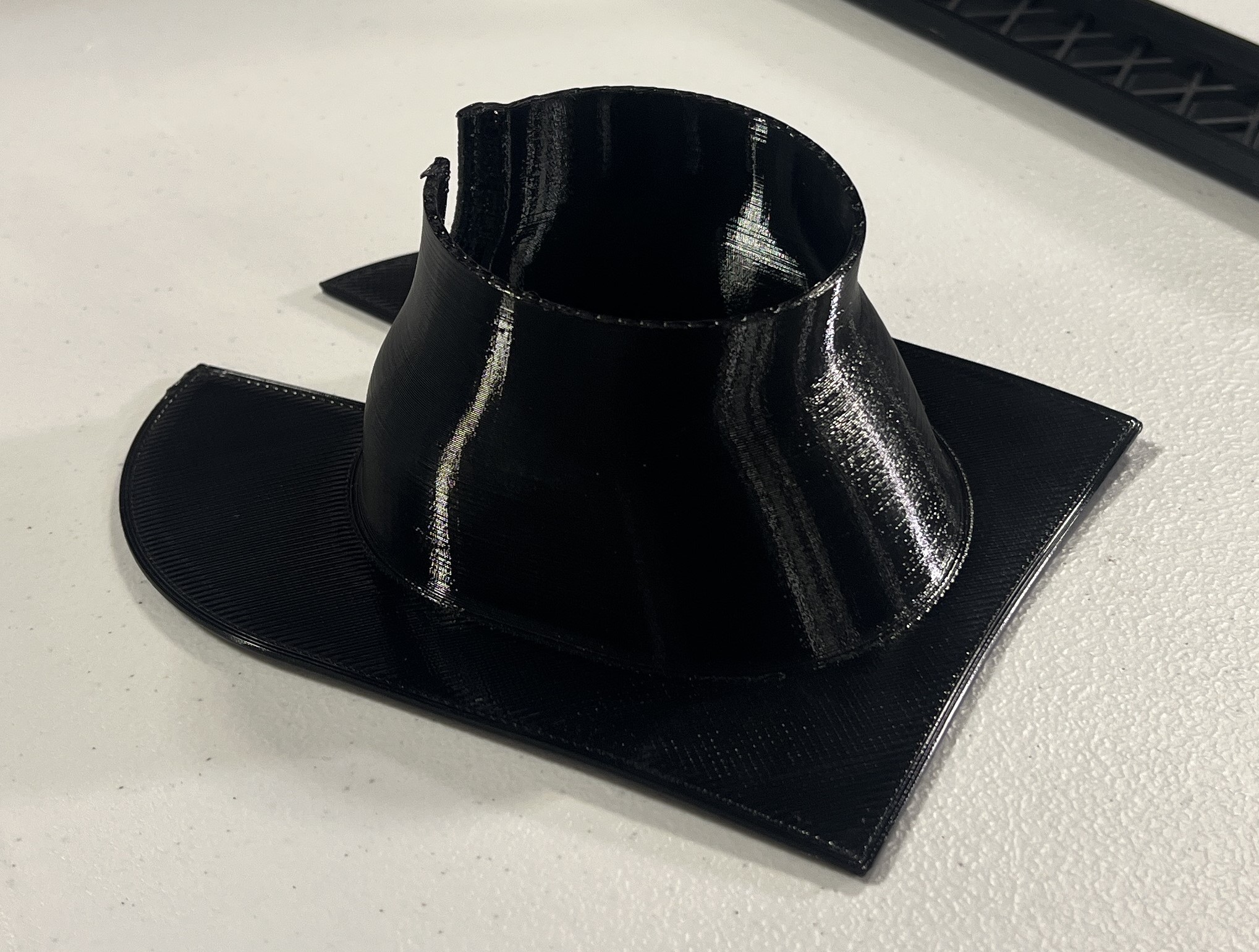
A custom 3D-printed steering column seal for $7 instead of $115
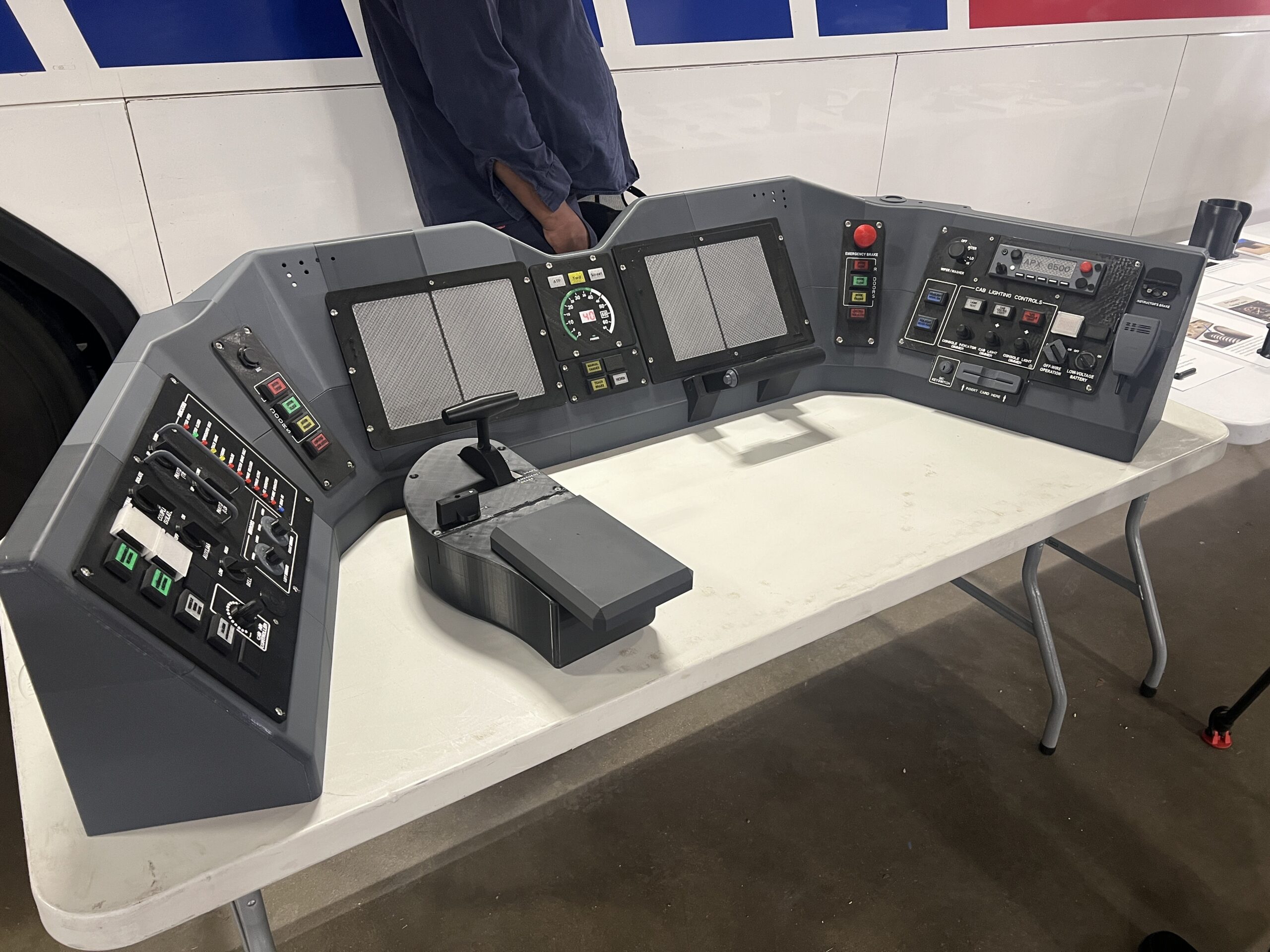
Our team 3D printed the dashboard assembly for the new MetroLink LRVs on order to jumpstart training
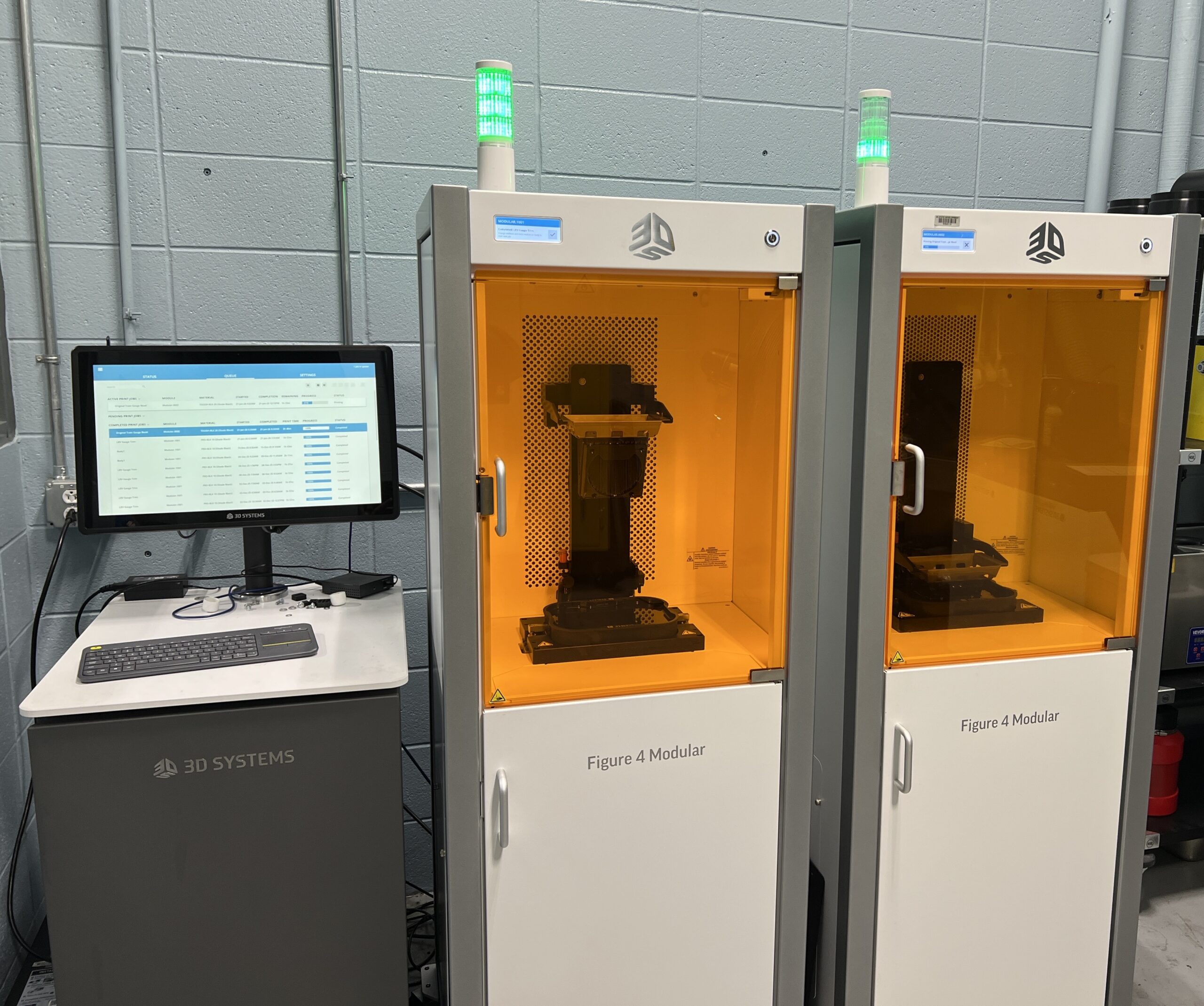
Two DLP 3D printers Metro uses to custom build parts
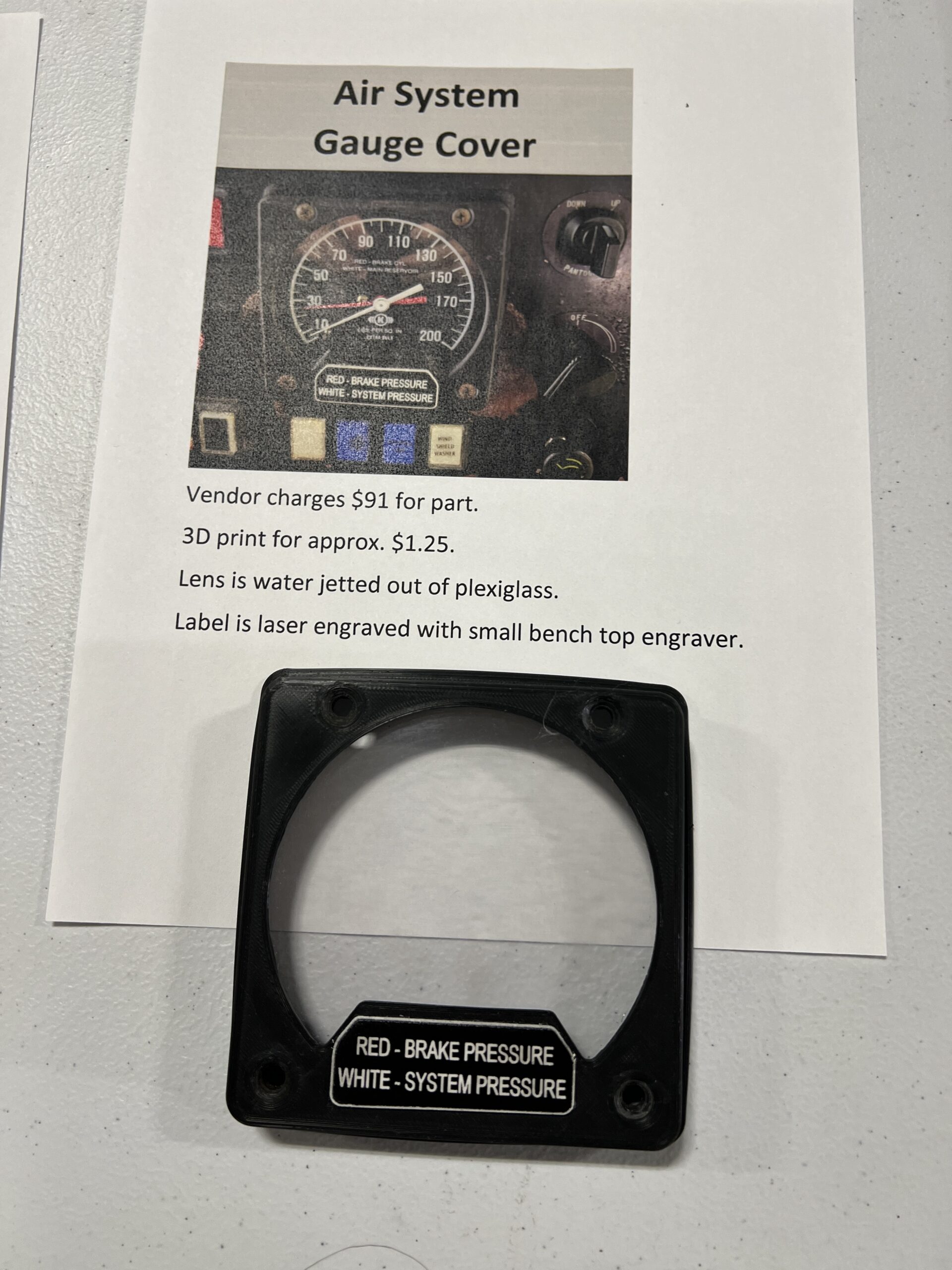
Purchase Price: $91
Metro 3D Price: $1.25
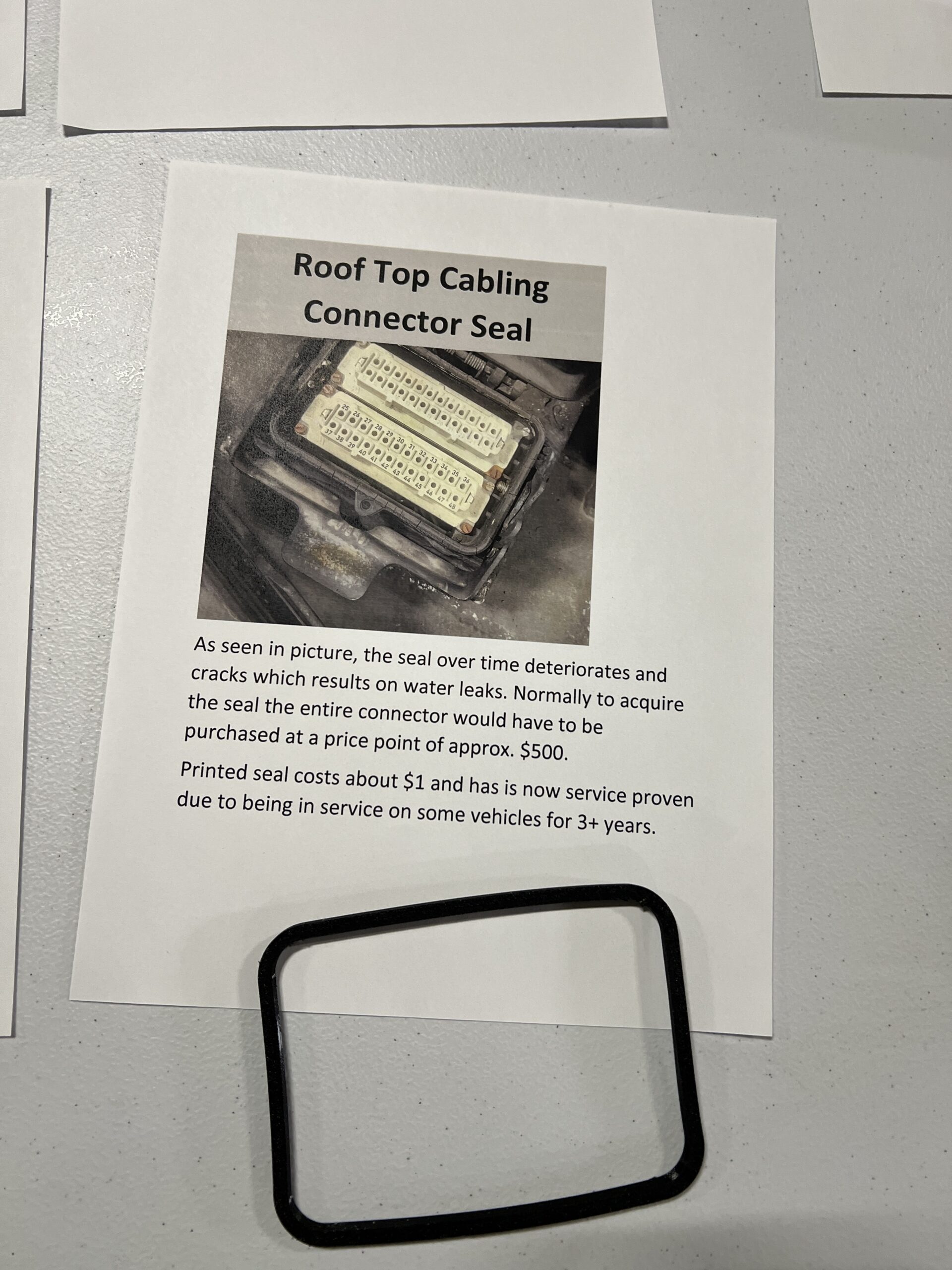
Purchase Price: $500
Metro 3D Price: $1
 Categories: